The Challenge
ProcDNA's Solution

Mapping the Reporting Ecosystem
ProcDNA did not start by asking which reports to cut. The first question was more basic: what did the organization actually have, and why did each piece exist? Answering it meant treating reporting as a connected ecosystem rather than a pile of individual dashboards, an idea that shaped everything that followed.
A Complete Map of the Reporting Estate
ProcDNA immersed itself in the reporting landscape, cataloguing every report in active use and who relied on it. It then traced the data source and calculation logic sitting behind each metric. What emerged was a picture of how the reporting estate had evolved: which reports were genuinely critical, which were duplicating each other, and which had simply never been reconsidered.
Certified Metric Definitions
With that map in hand, ProcDNA worked alongside the analytics and data science teams to resolve the different versions of the same metrics circulating across the organization. Together, they assigned each core metric one definition, one owner, and one calculation method, then rebuilt every surviving report to reference it.
Rationalizing Toward What the Business Needs
ProcDNA reframed the question from what to retire to what the business actually needed, assessing what remained by business purpose, user need, and decision relevance rather than usage numbers alone. The team consolidated overlapping reports and retired the ones that no longer earned their place, while redesigning the highest-value experiences for the users who depended on them. The aim was a smaller set of reporting experiences, each with a clear reason to exist, rather than one dashboard trying to serve everyone.
A Governance Structure to Keep It That Way
The work did not stop once the redesigned reports went live. ProcDNA helped the organization stand up its first reporting governance structure, complete with an intake process for new report requests and clear retirement criteria for existing ones, turning rationalization from a one-time cleanup into an ongoing mechanism for deciding what the estate needs next.
Impact
Reduce Dashboard Volume
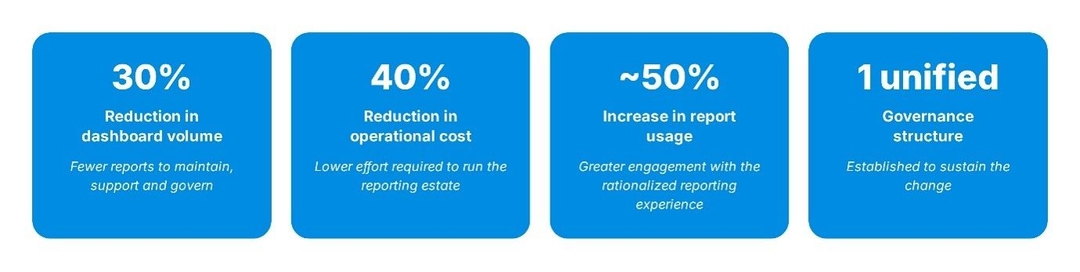
Cut dashboard volume by 30%, reducing the number of reports the organization had to maintain and secure.
Reduced Operation Costs
Reduced the operational cost of running the reporting estate by 40%.
Increased Report Usage
Increased report usage by nearly 50%, as users came back to dashboards, they could finally trust.
Unified Governance Established
Established the organization's first reporting governance council, with an intake process for new reports and retirement criteria for existing ones now covering the full estate.
Related Case Studies













Partner with us