

BACK TO ARTICLES
Agentic AI in Pharma: Moving Beyond Answers to Actions
Written by -Abhinay Kankani ,Rajan Dua
,Rajan Dua
The Rapid Evolution of AI in Pharma
Artificial Intelligence in pharma has moved faster than almost any other digital capability. In just a few years, we’ve seen adoption evolve through three major waves:
- Large Language Models (LLMs):These unlocked natural conversations with machines. Teams used them to summarize reports, draft content, and answer questions. Useful, but limited, they only responded to what was asked.
- Retrieval-Augmented Generation (RAG):To overcome hallucinations, LLMs were grounded in enterprise data. Instead of guessing, they could now reference approved internal content. This allowed reliable answers, but still kept the AI in a passive, “question answer” role.
- Multi-Agent Frameworks:Organizations began experimenting with orchestrating multiple AI agents. One agent might extract data, another summarizes, and another performs quality checks. Together, they performed tasks more effectively but still needed users to guide the process.
Now we stand at the next frontier:
Agentic AI
. Unlike the earlier stages, Agentic AI doesn’t just wait for instructions; it can plan, decide, and act
. This is where the true leap in productivity and impact begins.What is Agentic AI?
Agentic AI refers to AI systems that can operate with a level of autonomy, much like a colleague. Instead of requiring step-by-step prompts, you give the agent a goal, and it figures out how to achieve it.
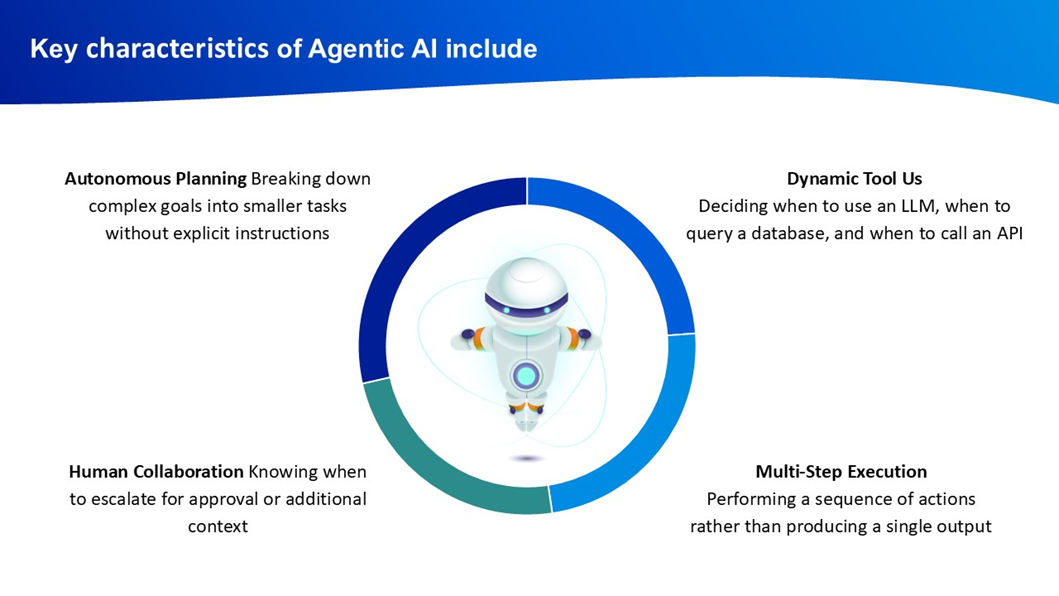
For example, if asked to “track competitor activities in oncology”, an agent could:
- Identify relevant data sources (clinical trial registries, publications, conference proceedings).
- Collect the most recent updates.
- Summarize findings and highlight trends.
- Compare against prior competitor moves.
- Deliver the output as a digest, dashboard update, or presentation draft.
This is a shift from “generate text” to “generate value.”
How is Agentic AI Different from Traditional AI?
It’s important to clarify how Agentic AI compares with the earlier phases:
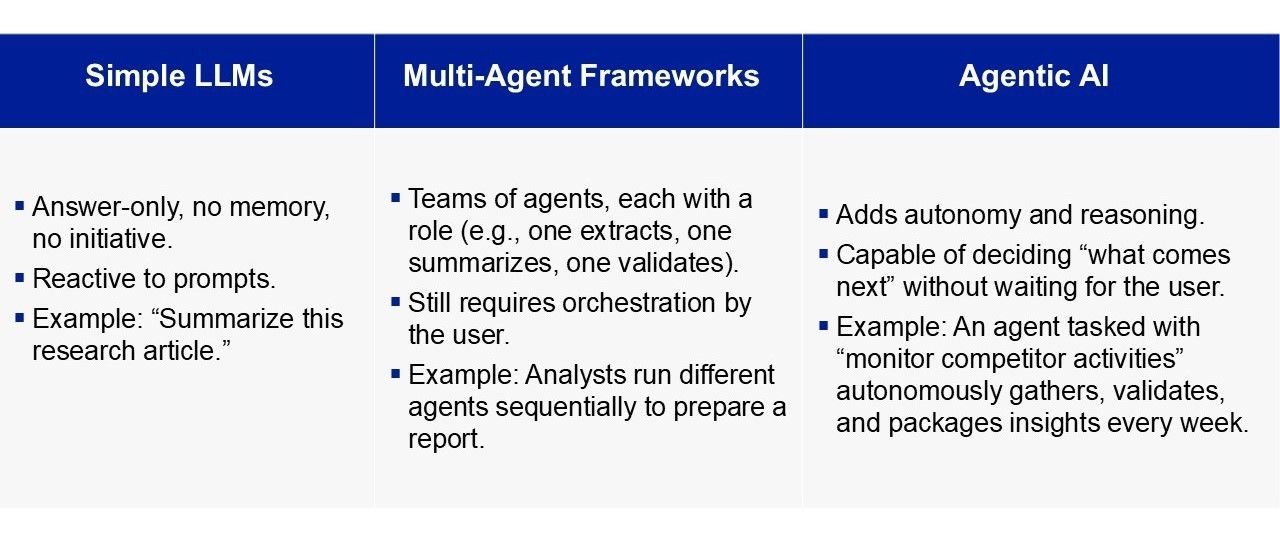
Think of the difference as moving from a
chatbot
→ to a digital analyst
→ to an autonomous colleague
.How do you create Agentic AI?
Building Agentic AI involves combining
LLMs + orchestration frameworks + external tools + governance
.Key ingredients:
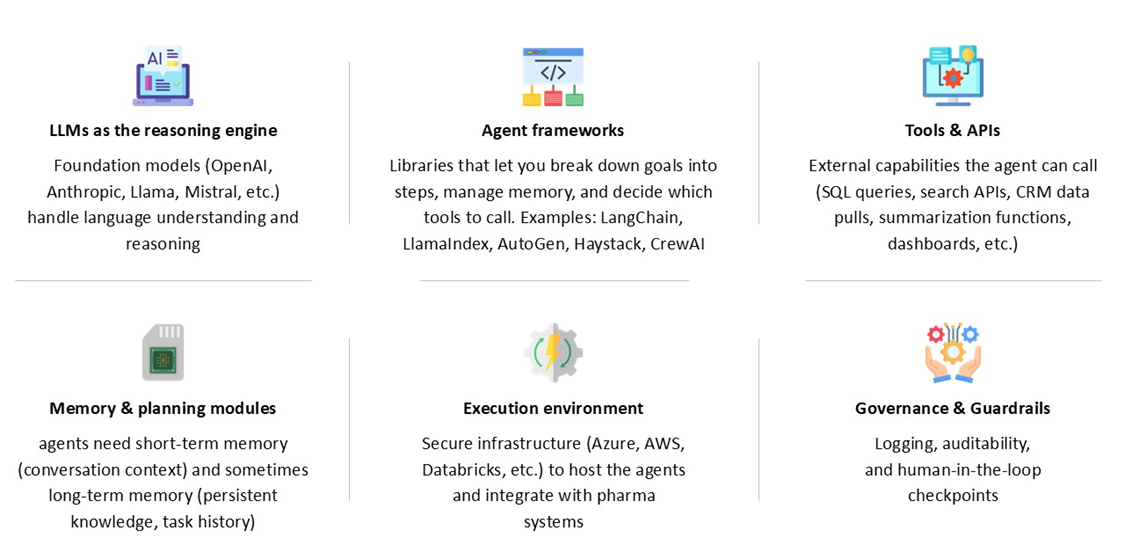
So in practice, creating Agentic AI is like
orchestrating a digital worker
with a brain (LLM), arms and legs (tools/APIs), and operating principles (governance).How Agentic AI Works in Practice?
When people hear “Agentic AI,” they often imagine a black box that somehow “knows what to do.” In reality, agentic systems are built on structured decision-making, where autonomy is bounded by design. Think of it as giving the AI both a playground (the scope of what it can do) and a toolbox (the actions it is allowed to take). Within those constraints, the agent uses reasoning to decide how to act.
Let’s take the example: “Keep me updated on competitor clinical trials.”
How does the agent actually decide what to do?
The Playground: Defining Boundaries
The first step is to
constrain the universe of options
. An agent cannot (and should not) have unlimited freedom. Instead, we define:- Data sources:e.g., ClinicalTrials.gov, EudraCT, PubMed, ASCO abstracts.
- Tools available:APIs to fetch data, a summarization model, a comparison engine, a notification service.
- Rules of engagement:e.g., “check weekly,” “focus only on Phase II+ oncology studies,” “alert only on meaningful changes.”
This step ensures the agent operates in a
controlled, compliant, and auditable environment
.The Toolbox: Equipping the Agent
The “toolbox” is a set of external resources the agent can call when it needs to go beyond text generation. Think of them as plug-ins the agent can use.
Examples of real tools in pharma workflows:
- ClinicalTrials.gov API →fetch new or updated trial records.
- PubMed API →search for competitor publications.
- Internal SQL connector →query company’s trial or safety databases.
- Email/Slack integration →send alerts directly to teams.
- PowerBI connector →push summarized insights into dashboards.
The agent doesn’t “know” how to do these things on its own. But if you equip it with these tools, it can decide:
- Which tool to use (e.g., PubMed vs CT.gov).
- When to use it (e.g., daily vs weekly scans).
- How to combine outputs (e.g., compare trial status changes across sources).
The Reasoning Loop: Making Decisions
Now comes the autonomy. Given the goal - “monitor competitor trials” -the agent runs a reasoning loop:
- Plan:“To monitor trials, I should fetch data from ClinicalTrials.gov.”
- Act:It calls the API and retrieves new entries.
- Reflect:It checks if this data overlaps with last week’s data.
- Decide:If there is a change (e.g., a Phase III trial just moved to ‘Completed’), it flags this as meaningful.
- Communicate:It writes a concise summary and sends an alert.
The “decision” here is not hard-coded. It comes from the agent’s
ability to plan, select tools, and adapt based on results
, all guided by the LLM’s reasoning.Shaping Decisions: Telling vs. Teaching vs. Training
There are three ways to influence how the agent makes choices:
- Telling (Explicit Orchestration):We write rules in prompts or code. “Always check ClinicalTrials.gov first, then filter by oncology.”
- Teaching (Few-Shot Guidance):We give examples. “Here’s how analysts typically prioritize trial changes; mimic this approach.”
- Training (Fine-Tuning):We train the model on pharma-specific decision patterns, so it develops instincts on what matters without explicit rules.
In practice, most organizations start with
telling
, add teaching
as the agent matures, and only invest in training
once they want deep domain specialization.Applications of Agentic AI in Pharma
Competitive Intelligence – Trial & Publication Monitoring
Maria, a CI analyst, spends hours scanning ClinicalTrials.gov and PubMed for competitor oncology updates.
With Agentic AI, she sets a goal: “Alert me when Rengene Pharma has a new lung cancer trial or publication.”
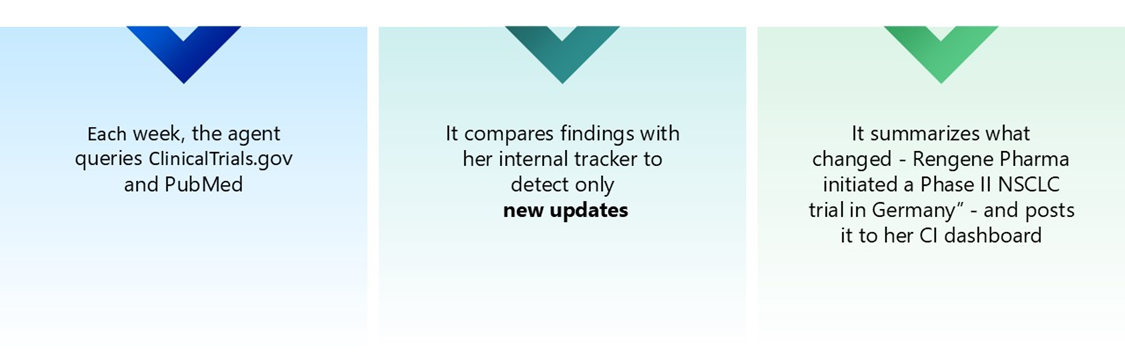
Instead of drowning in raw data, Maria now spends her time analyzing strategy, not copy-pasting records.
Market Research Analytics Synthesizing Qualitative Insights
Ethan’s insights team has just finished 150 interviews with oncologists across three countries. Normally, it takes weeks to read transcripts and code themes.
With Agentic AI, they upload all transcripts and set a goal: “Summarize key themes by market, compare against last year’s study.”
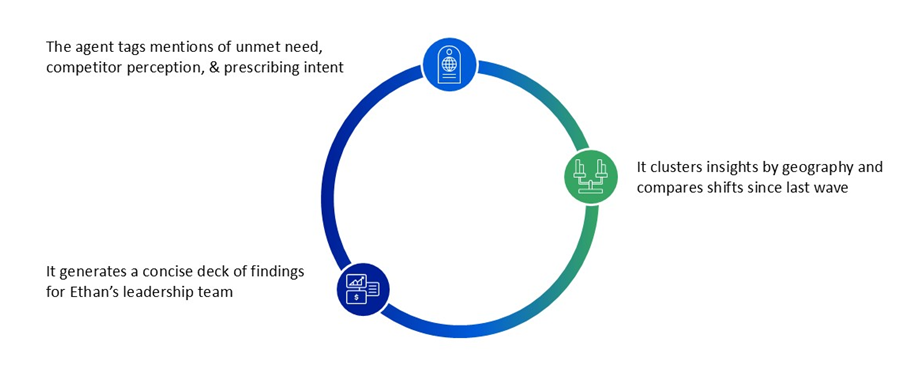
What took weeks now takes days, letting the team focus on
storytelling and recommendations
.Commercial Operations Automated Reporting & QC
Sara, an Ops lead, often deals with late-night pings when dashboards fail to refresh or data quality checks break.
With Agentic AI, she defines: “Monitor data refreshes, flag QC issues, and update my PowerBI dashboard daily.”
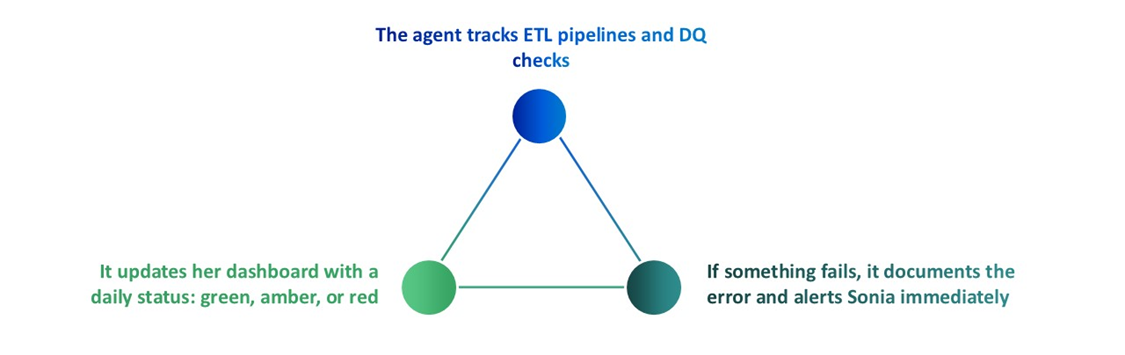
Sara moves from firefighting to proactive oversight, with fewer surprises.
Medical Affairs Preparing for a KOL Meeting
Lena, an MSL, is scheduled to meet a top KOL at a major cancer center. She needs to prepare quickly with the latest insights on the KOL’s work, interests, and recent activity.
With Agentic AI, she sets a goal: “Prepare a briefing pack for my meeting with Dr. Smith.”
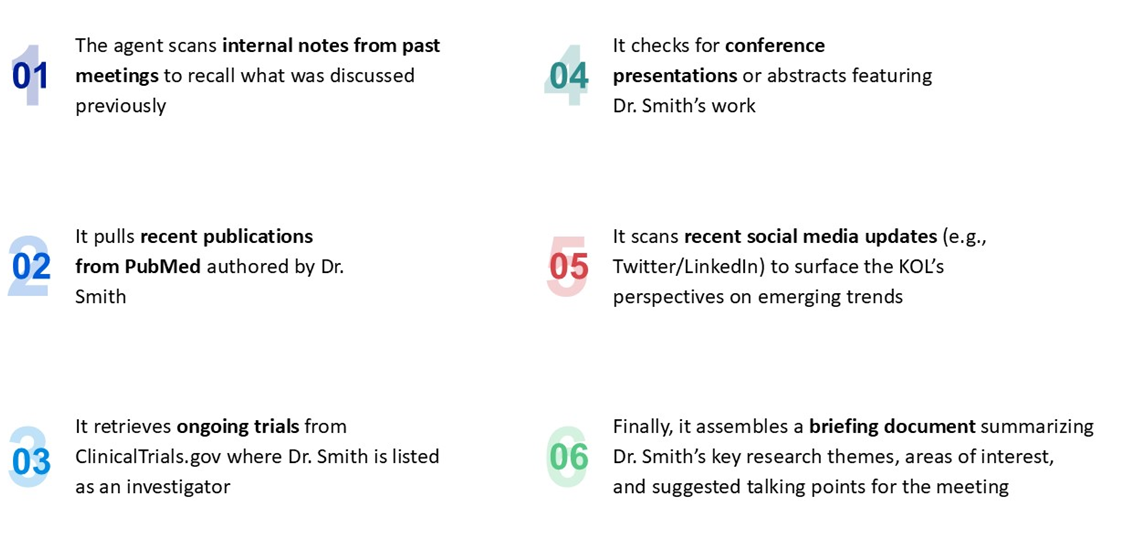
Instead of piecing this together manually across multiple platforms, Lena walks into the meeting fully prepared with a
360° view of the KOL’s recent activity and scientific focus
.These use cases highlight only a fraction of Agentic AI’s power. Imagine what else it can do, let’s explore together.
Read More Articles
Connect with us


Capabilities
©2026 ProcDNA Inc. | All Rights Reserved