
BACK TO BLOGS
From Dashboards to Decisions: How AI is Turning BI into an Execution System
 Namarata Dhankani
 6 min
6 min



As AI Accelerates Decision Making, Organizations must Rethink how Insights Translate into Execution
In the age of AI, teams today are not struggling to get insights, they are struggling to act on them!
Traditionally, dashboards were built to exactly solve this problem. They helped teams track performance, spot trends, and make better decisions. And for years, they worked.
Now AI is changing the game again.
Instead of navigating dashboards, users can simply ‘ask AI’ and get answers instantly. What used to take hours or even days now takes seconds.
In theory, this looks like progress: faster insights, less reliance on analysts and easier access to data.
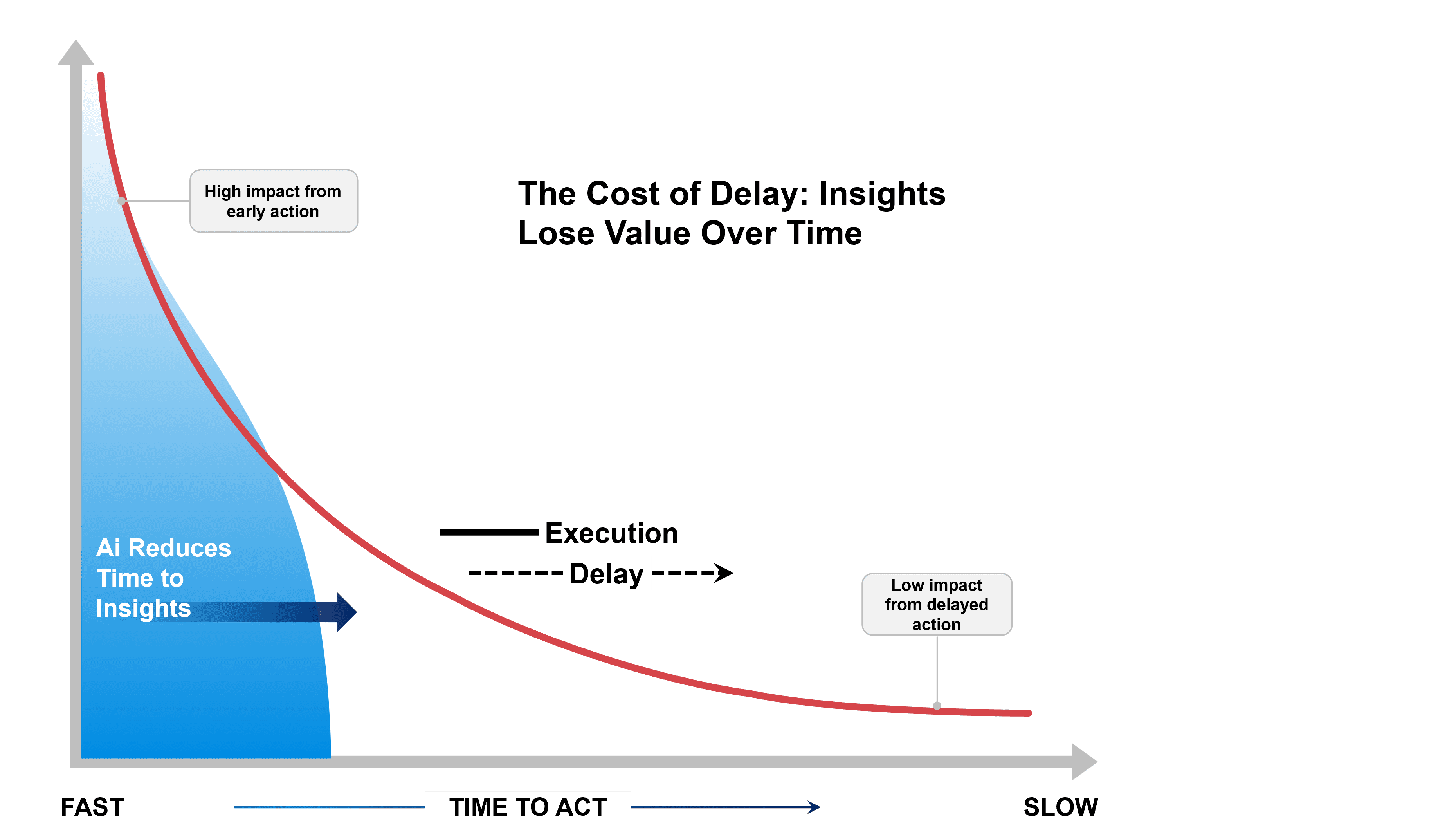
But there is a catch! While the time-to-insight has dropped significantly, the time-to-action, hasn’t.
Teams are making decisions faster, but execution still depends on manual steps, disconnected tools, and follow-ups across systems. This is creating a new kind of gap. Not a data gap, but an execution gap.
The next evolving phase of BI won’t be defined by better dashboards or faster answers. It will be defined by how organizations close the gap and turn insights into actions.
This is the shift from dashboards to decision systems.
Dashboards to AI: What Shifted?
For a long time, dashboards defined how teams interacted with data. They brought multiple data sources together, created a shared view of performance, and helped answer key questions around trends and targets.
But getting to those answers wasn’t always simple. It required navigating reports, applying filters, slicing data, and often going back and forth with analysts.
AI has fundamentally changed that experience. Today, users do not spend hours studying their dashboards the same way – they ask.
- What is driving the drop in prescriptions?
- Which segment is underperforming?
- Where should we focus next?
And instead of navigating multiple views, they can now get direct answers, summaries, and explanations in seconds.
The shift is not just about speed; it’s how people interact with data. We have moved from navigating dashboards to having conversations with data.
The Real Problem: The Execution Gap
While getting answers is now easier than ever, acting on those answers is not.
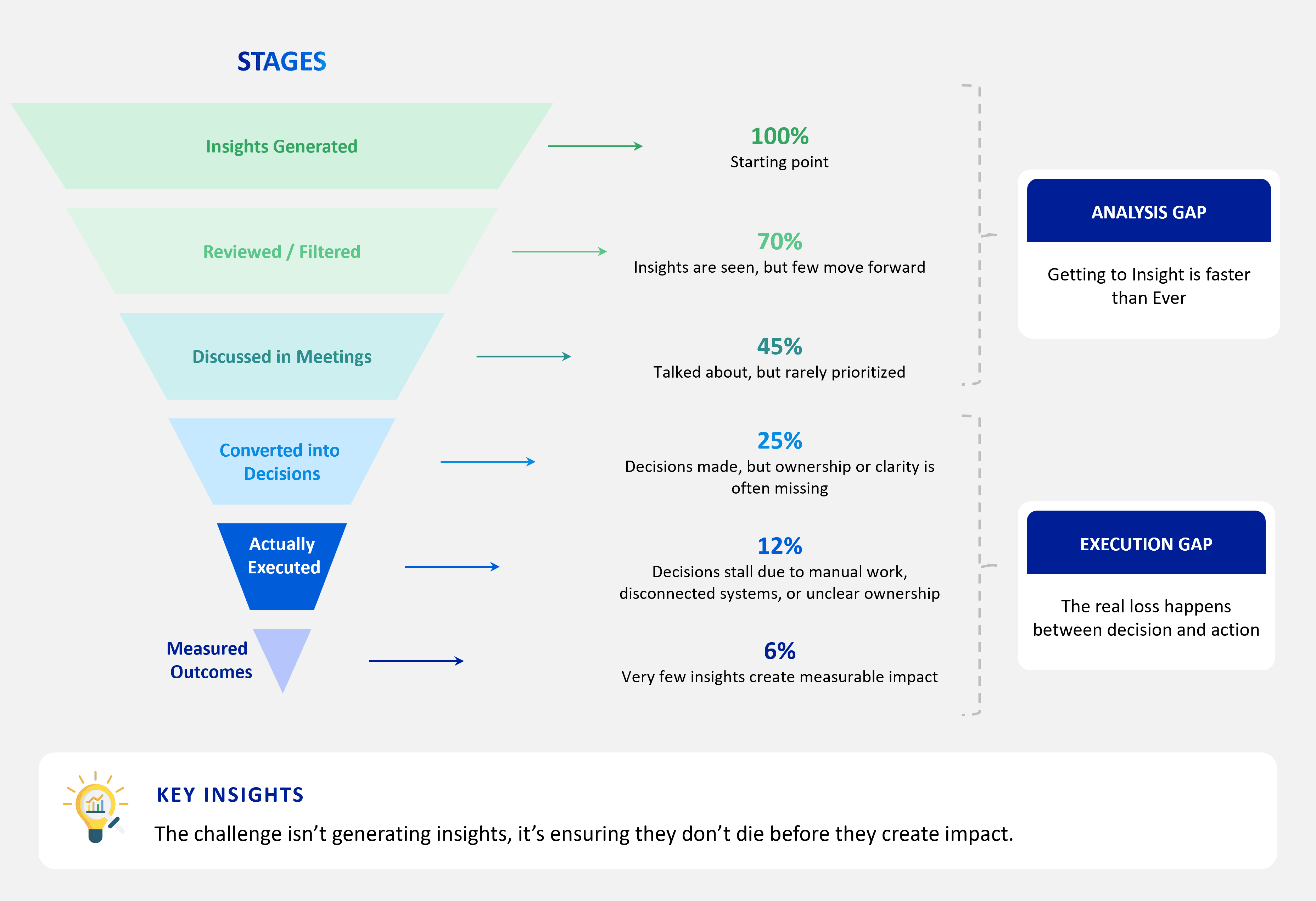
Most organizations have optimized for insight generation. But what happens after an insight is identified is still slow, fragmented, and manual.
In practice, the flow often looks like this:
Insight → Discussion → Alignment → Action → Execution
Each step adds time and each handoff creates friction.
Insights are reviewed in dashboards, discussed in meetings, translated into actions, and then executed across separate systems. By the time action happens, the moment may already have passed.
This is the Execution Gap
It’s not that organizations lack insights. It’s that they lack a reliable, scalable way to act on them.
Why this Gap Exists
The gap exists, not because teams lack data or insights, but the way most systems are designed, which does not support action.
Over the years, organizations have invested heavily in data management and building dashboards. But execution / decision operationalization has evolved separately, often in entirely different systems.
A few common patterns show up across organizations:
- Separation of analytics and execution systemsInsights sit in BI tools, while actions happen in CRM systems, marketing platforms, or patient engagement tools. These systems, more often than not, are disconnected.
- Lack of embedded analytics within workflowsTeams have to leave their workflow, check a dashboard, and then come back to act. Very often the insights are not present where the actions are being taken.
- No real-time trigger for actionVery often, there is no system in place to respond automatically or immediately to a trigger, creating an event-driven decisioning system.
- The “last mile” lacks ownershipIt is often not defined who is responsible for turning an insight into action.
As a result, even highly data-driven organizations rely on manual coordination to close the loop.
Key Insight: Insight is Automated. Execution isn’t
AI has helped teams understand what is happening. It can surface patterns, explain trends, and highlight anomalies in seconds. It even helps answer why something is happening.
However, AI does not inherently decide what should be done next or how that action should be executed.
That’s exactly where most organisations get stuck because answering questions is not the same as driving outcomes. Without a clear path to execution, even the most accurate insights risk becoming passive intelligence.
Moving from Insight to Action
To close the outlined gap, organizations need to think beyond dashboards and AI copilots, and start designing for execution.
A simple way to look at this is as a three-step loop:
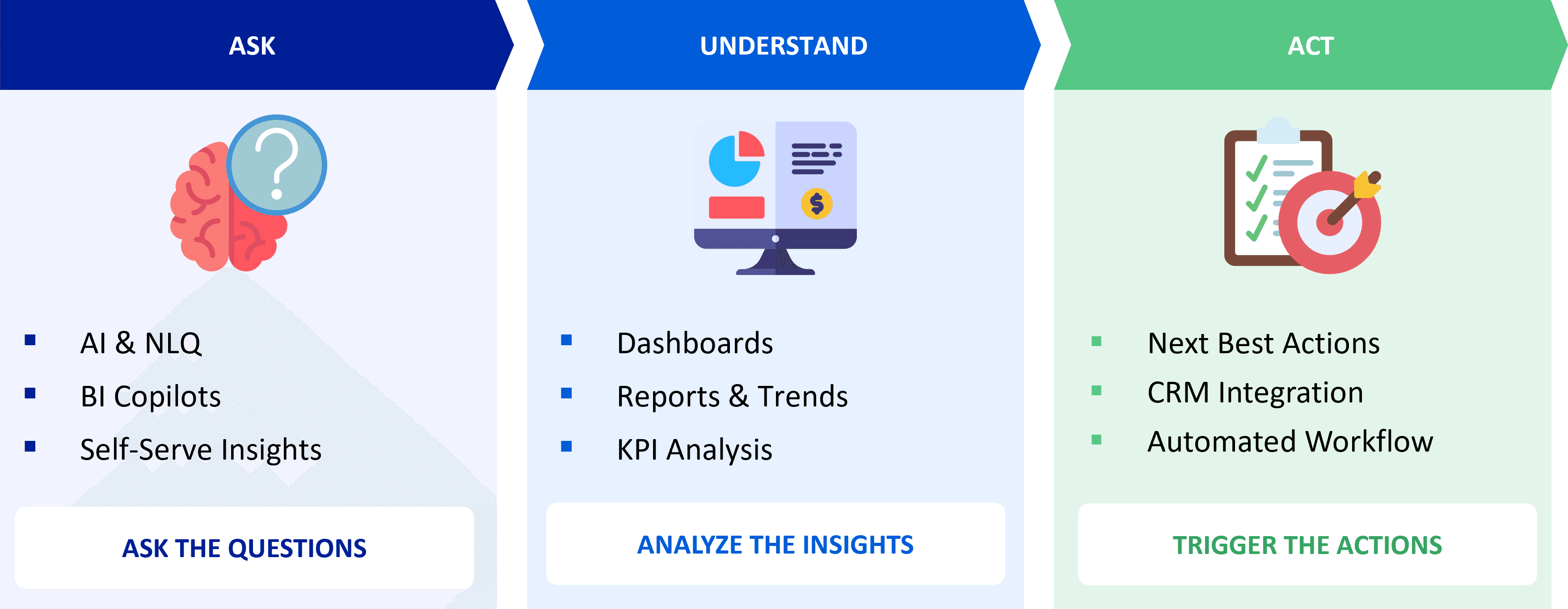
This is what turns analytics from a reporting capability into a decision system.
What Enables this: The Technology Foundation
Turning insights into action requires the right foundation across data, systems, and workflows.
Key enablers include:
- API-led Integration:Connectivity between BI platforms and execution systems (like CRM, field force tools, and engagement platforms).
- Event-driven data pipelines:The ability to detect and respond to signals (e.g., prescription drop, engagement decline) in real time.
- Semantic layer standardization:Consistent definitions of metrics to ensure alignment between insight and action layers
- Workflow orchestration engines:Systems that can translate insights into action flows
- Role-based decision frameworks:Clear mapping of insights to owners, actions, and expected outcomes
This shifts the architecture from
data → reporting
to data → decision → action.
What this Looks Like in Practice: A Working Example
Consider a pharma commercial scenario: A brand team identifies a decline in prescriptions among Tier-1 oncologists in a key geography.
- ASK (AI Layer):A business user queries the system and is alerted to a significant drop in TRx, along with a summary of impacted segments
- UNDERSTAND (BI Layer):A dashboard analysis reveals a shift toward competing therapy and lower engagement from field representatives in that region
- ACT (Execution Layer):The system triggers relevant signals to each stakeholder, ensuring the response is coordinated
- Updates to field force call plans
- Targeted content recommendations for affected HCPs
- Alerts to regional managers for intervention
The difference is not just faster identification, it is
coordinated, immediate action.
What Organizations should do next
To move toward decision systems, organizations should focus on three priorities:
- Design for action (not just insight)Shift success metrics from dashboard adoption to action effectiveness
- Embed analytics into business workflowsEnsure insights surface where decisions are actually made
- Connect AI and BI to execution systemsBuild the integration layer required to operationalize decisions at scale
This requires alignment across data, technology, and business teams, not just investment in analytics tools.
Conclusion
The evolution of Business Intelligence is no longer just about improving how we analyze data, it is about transforming how organizations act on it.
We are moving from:
- Dashboards to AI-driven insights
- Decisions to execution systems
The organizations that will be able to differentiate themselves are not those with the most advanced dashboards or the fastest insights. It would be those that can ensure insights consistently translate into action.
Ultimately, the value of intelligence is not in what it reveals but in what it enables.
Related Resources
Partner with us
At the heart of our approach is a commitment to your success. We take time to understand your unique challenges and craft tailored solutions that drive meaningful results. Let's build something extraordinary together.
Connect with us


Capabilities
©2026 ProcDNA Inc. | All Rights Reserved